Problem guide
Dashboard Warning Lights and Electrical Faults
A warning light means a system has logged a fault and wants it looked at. It doesn't say which component has failed, and it doesn't always mean the problem lies in the system showing the light. This guide is for drivers around Paisley and Renfrewshire trying to understand what they're seeing.
Interpreting a light properly means reading the stored code, then putting it in context with electrical measurements and the conditions in which it appeared.
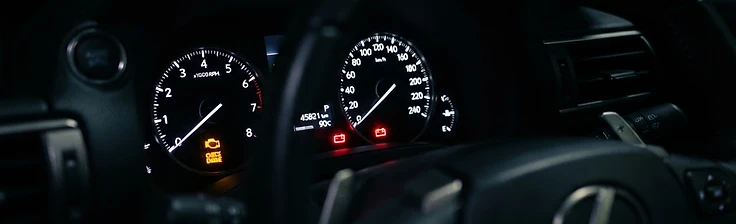
Common warning lights
Electrical system lights
- Battery light — charging system, alternator control or supply
- Engine management light — a recorded fault in engine or emissions systems
- ABS light — wheel speed sensors, wiring or the ABS system itself
- Airbag light — restraint system circuits, connectors under seats
Patterns worth noting
- Traction control light, often alongside ABS
- Several lights appearing together after a jump start
- Lights that come on intermittently or only when cold
- Lights that clear themselves and then return
Low system voltage causing unrelated-looking faults
Modern vehicles are sensitive to voltage. A weak battery, a poor earth or a charging fault can make several modules log faults at once, producing a cluster of warning lights that look unrelated to each other.
That's why battery and charging condition is usually checked early, even when the lights showing seem to point elsewhere.
Why a code needs context
A code identifies the circuit or system that logged a problem. It can't tell the difference between a failed sensor, a broken wire, a corroded connector, a poor earth or a fault elsewhere that the module noticed.
Testing the circuit — supply, earth, signal and live values — is what turns a code into an actual diagnosis.
A red warning light, overheating warning, oil-pressure warning or brake-system warning may mean the vehicle needs to be stopped and assessed before driving further.
Can warning lights be cleared?
Codes can be cleared once the underlying cause has been sorted. Clearing a light without working out why it appeared usually means it comes back — and it also erases information that would have helped identify the fault.
Where this is available
We cover Paisley and the surrounding Renfrewshire area. Whether a mobile visit works depends on where the car is, what the fault is, and what's available at the time.
FAQs
Frequently asked questions
Why have several warning lights come on at once?
Multiple lights often point to a shared cause such as low system voltage, a poor earth or a communication problem, rather than several unrelated failures.
Can I keep driving with a warning light on?
It depends on the light. Red warnings, overheating, oil pressure and brake-system warnings may mean stopping and having the vehicle assessed before driving further.
Does an engine management light always mean an expensive repair?
No. It means a fault has been recorded. The cause can be as simple as a connector or as involved as a component failure — which is why testing comes first.
Related pages
Next step
Tell us what the car is doing
The first step is understanding what's happening. Give us a call or send over the vehicle details and we'll help work out whether a mobile appointment makes sense.
We cover Paisley and the surrounding Renfrewshire area. Whether a mobile visit works depends on where the car is, what the fault is, and what's available at the time.
Phone: 0141 345 1756